“ONE OSCAR. TWO ICONIC FILMS. A QUIET GOODBYE AT 95.” “I love the smell of napalm in the morning.” A line that lived forever because Robert Duvall did. He passed away at 95, quietly, at home in Virginia. No spotlight. Just love around him. His wife, Luciana, wrote a goodbye that felt like a whisper after a long day. Duvall never chased noise. He stood still. Let a glance do the work. From The Godfather to Apocalypse Now, he carried weight without raising his voice. One Oscar for Tender Mercies, and decades of roles that felt lived-in. Hollywood is louder today, but something steady is missing. And the last moments—how they unfolded—leave more to wonder than words can hold.
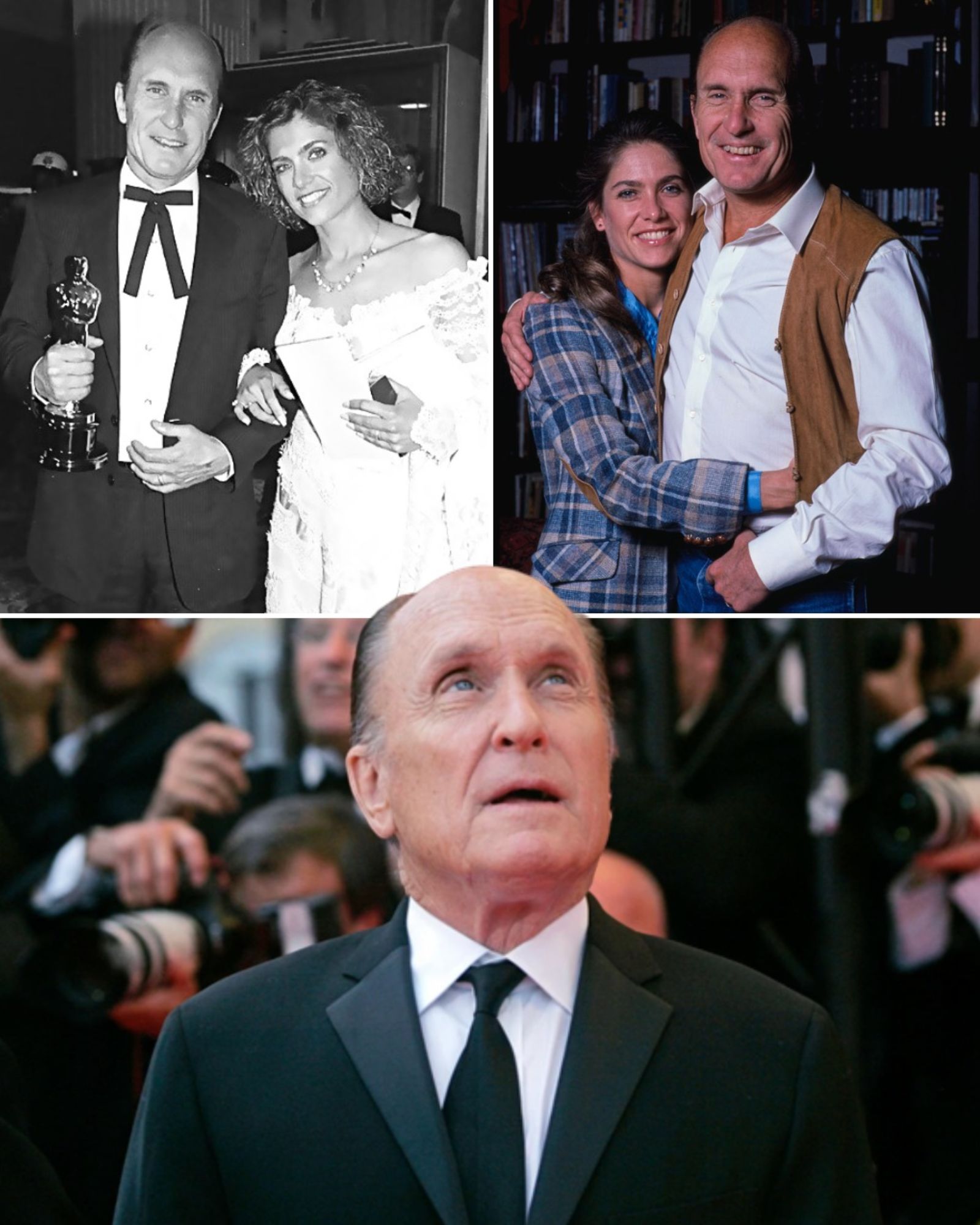
Robert Duvall Dies at 95: A Legendary Career That Shaped American Cinema
Legendary actor Robert Duvall has passed away at the age of 95. The acclaimed Hollywood icon died peacefully at his home in Middleburg, Virginia, on Sunday, according to a statement shared by his wife, Luciana Duvall.
In an emotional message, she wrote:
“Yesterday we said goodbye to my beloved husband, cherished friend, and one of the greatest actors of our time. Bob passed away peacefully at home, surrounded by love and comfort.”
She continued, “To the world, he was an Academy Award-winning actor, a director, a storyteller. To me, he was simply everything.”
A Career That Defined Generations
Across more than six decades, Robert Duvall built a career marked by depth, restraint, and extraordinary versatility. He received seven Academy Award nominations and won the Oscar for Best Actor for his unforgettable performance in Tender Mercies (1983), portraying a troubled country singer searching for redemption.
While that performance earned him his only competitive Academy Award win, his body of work remains one of the most respected in American film history.
Iconic Roles That Endure
Duvall’s portrayal of Tom Hagen in The Godfather (1972) and The Godfather Part II (1974) remains one of the defining performances of the franchise. As the calm and calculating consigliere to the Corleone family, he brought quiet intelligence and emotional nuance to a role that earned him his first Oscar nomination.
In Apocalypse Now (1979), Duvall delivered one of cinema’s most unforgettable supporting performances as Lt. Colonel Bill Kilgore. Though he appeared on screen for only a brief portion of the film, his presence dominated. His line, “I love the smell of napalm in the morning,” became one of the most quoted moments in film history.
Earlier in his career, he appeared in To Kill a Mockingbird (1962), portraying the mysterious Boo Radley — a small role that marked the beginning of a remarkable journey in Hollywood.
Beyond film, Duvall also earned acclaim for his work in television, winning a Golden Globe for his performance in the 1989 miniseries Lonesome Dove, a role he often described as one of his personal favorites.
A Presence Both Powerful and Subtle
What set Robert Duvall apart was not just the range of roles he played, but the authenticity he brought to each character. Whether portraying hardened military officers, Southern gentlemen, musicians battling inner demons, or quiet observers, he infused every performance with emotional truth.
His wife reflected on that dedication in her tribute:
“For each of his many roles, Bob gave everything to his characters and to the truth of the human spirit they represented. In doing so, he leaves something lasting and unforgettable to us all.”
A Lasting Legacy
In addition to his Academy Award, Duvall earned four Golden Globe Awards and countless honors recognizing his contributions to film and television. Yet those who knew him best often spoke not just of his talent, but of his passion — for storytelling, for good food, and for spirited conversation.
He passed away at his Virginia ranch in Middleburg, surrounded by family and love — a quiet farewell fitting for an actor whose greatest power often came from subtlety rather than spectacle.
Robert Duvall leaves behind a legacy that will endure across generations of filmmakers and audiences. His characters will continue to live on screen, carrying the depth, complexity, and humanity he brought to them.
As fans revisit his iconic performances, one truth remains clear: Robert Duvall was not just a star of classic cinema. He was one of its defining forces.