2.6 Billion Views in Hours: Paul Thomas Anderson Shocks the Oscars 2026 With $250 Million Pledge to Break Television’s Silence
The most memorable moment of this year’s Oscars night: 2.6 billion views in just a few hours — right on the stage while receiving the Best Director award of the year, Paul Thomas Andersonunexpectedly declared that he would spend $250 million to break the silence of television. On the giant screen of the stage, he bluntly exposed many powerful figures.
What began as a routine acceptance speech at the 98th Academy Awardsquickly transformed into a moment that few in the audience — or watching around the world — will ever forget. The ceremony, held at the legendary Dolby Theatre in Hollywood, had already been filled with emotional wins and glamorous appearances. But nothing prepared viewers for what would unfold when Anderson stepped up to the microphone holding his Oscar statuette.
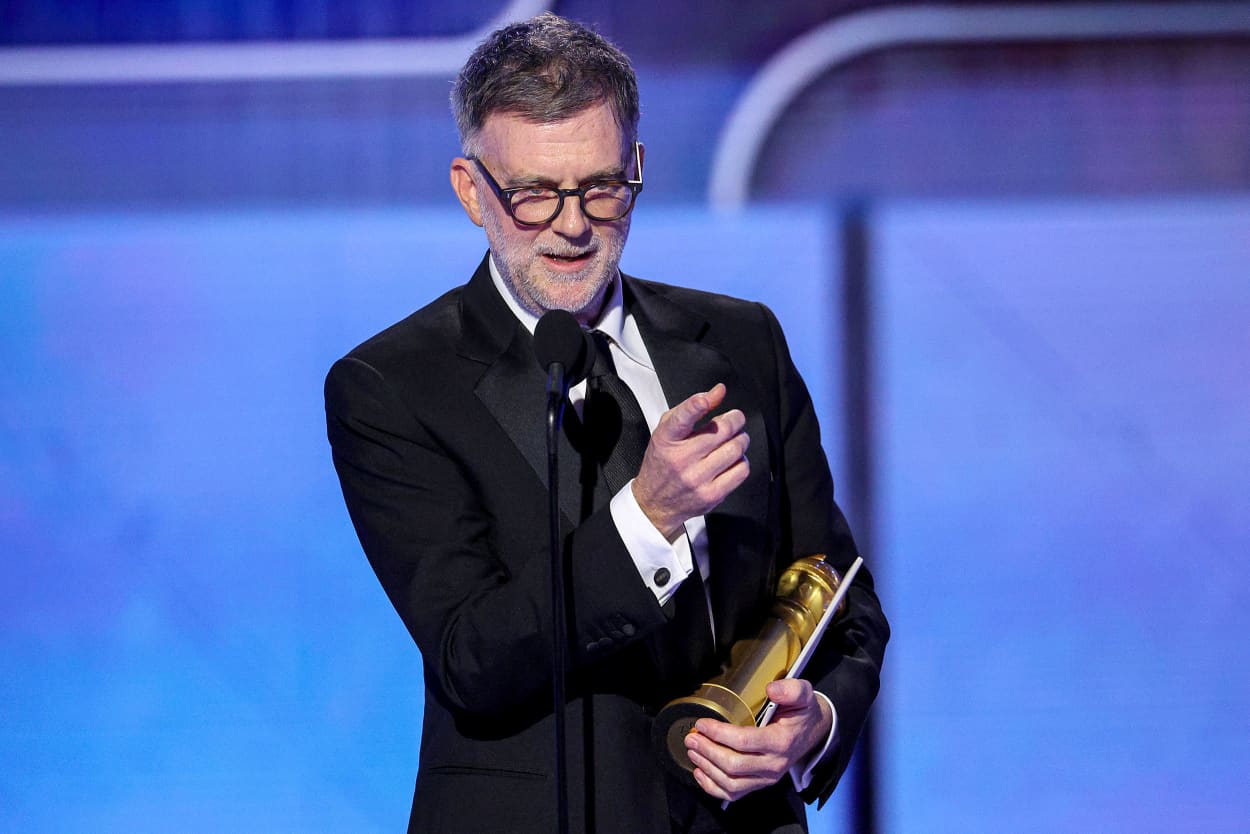
As the spotlight tightened around him, the room expected the familiar words of gratitude — thanks to collaborators, family, and the film community. Instead, Anderson paused, looked across the packed auditorium, and delivered a statement that immediately shifted the atmosphere in the room.

“I will spend $250 million if necessary,” he declared, “to break the silence that television has kept for too long.”
For a brief moment, the audience appeared unsure whether they had heard correctly. Then, behind him, the massive curved screen that dominates the Oscars stage flickered to life.
A Stage Transformed
The Oscar stage is famous for its elegance — gold lighting, sweeping architecture, and enormous cinematic screens designed to celebrate the beauty of filmmaking. But on this night, the screen took on a very different role.
Instead of film clips or celebratory montages, the giant display began showing a sequence of images and references connected to what Anderson described as “a decade of silence.” While he did not linger on each detail, the implication of his message was unmistakable: powerful individuals and institutions had avoided scrutiny for years.

Gasps could reportedly be heard throughout the auditorium.
Industry executives, actors, and filmmakers who had come expecting a traditional awards celebration suddenly found themselves witnessing something closer to a confrontation.
Several attendees later described the moment as surreal — as though the line between entertainment and real-world reckoning had briefly disappeared.
A Silence That Spoke Volumes
The reaction inside the theater was unlike the thunderous applause that usually follows a major Oscar win.
Instead, there was a stillness.
Some in the audience leaned forward in their seats, while others exchanged confused glances. A few cameras briefly captured stunned expressions among Hollywood’s elite as Anderson continued speaking.
Unlike many acceptance speeches that drift into emotional reflection, his remarks carried a different tone — calm, deliberate, and unmistakably direct.
He spoke not only about filmmaking but about storytelling itself: the idea that stories have the power to reveal truths that institutions sometimes try to avoid.

“Cinema was never meant to stay silent,” he said.
Those words would soon echo far beyond the walls of the Dolby Theatre.
The Internet Explodes
Within minutes of the broadcast ending, clips of the moment began spreading across social media platforms at an astonishing pace.
Short videos of Anderson’s speech appeared on countless feeds, each accompanied by captions expressing disbelief, admiration, or confusion. Commentators, journalists, and fans rushed to interpret what exactly had just happened on one of the world’s biggest entertainment stages.
The numbers were staggering.
Within just a few hours, combined views of the clips surpassed 2.6 billion across streaming platforms and social media networks. Analysts quickly described it as one of the fastest-spreading moments in the history of televised awards shows.
The moment quickly eclipsed every other highlight of the night.
Even major winners and emotional speeches from other actors seemed to fade into the background as the internet focused on Anderson’s unexpected declaration.
A Divided Reaction
As the video continued to circulate globally, reactions poured in from every corner of the entertainment world.
Supporters praised the speech as an act of courage. Many argued that a figure as influential as Anderson using the Oscars stage to challenge powerful institutions was a rare and meaningful moment.
Others viewed the speech more cautiously, suggesting that such statements might spark intense controversy within an industry that has historically been careful about public confrontations.

Yet regardless of the interpretation, few people disagreed on one point: the moment had completely altered the tone of the evening.
One television critic described it simply as “the night Hollywood stopped pretending everything was normal.”
A Career Defined by Bold Choices
For those familiar with Anderson’s work, the speech may not have been entirely surprising.
Throughout his career, the filmmaker behind movies like There Will Be Blood, Magnolia, and Boogie Nights has often explored themes of power, corruption, and the hidden forces shaping human behavior.

His films rarely avoid uncomfortable truths.
But delivering such a direct message on the Oscars stage — an event watched by millions and carefully produced to celebrate the film industry — was something else entirely.
In that moment, Anderson seemed less like a director accepting an award and more like a storyteller pushing the boundaries of where stories can be told.
The Beginning of Something Bigger?

As the ceremony ended and Hollywood’s biggest stars exited the theater, one question continued to dominate conversations online:
Was this simply an emotional speech — or the start of something much larger?
Anderson’s promise to invest $250 million in breaking what he called “television’s silence” has already fueled intense speculation about future projects, investigative productions, or media initiatives that could emerge from his statement.
For now, details remain unclear.
But what is certain is that the moment has already secured its place in Oscar history.
A Night the World Won’t Forget
The Oscars have always been known for unforgettable moments — shocking wins, emotional tributes, and occasionally controversial speeches.
Yet what happened this year felt different.
Instead of a brief flash of drama, the moment sparked a global conversation about storytelling, power, and the role of media in confronting difficult truths.
And in the end, one image from the night continues to circulate across the internet:
Paul Thomas Anderson standing alone under the golden lights of the Oscars stage, Oscar statue in hand, while a massive screen behind him illuminated a message that left the world watching in stunned silence.
Whether the consequences of that moment will reshape Hollywood remains to be seen.
But one thing is certain.
On this year’s Oscar night, the world didn’t just watch a filmmaker win an award.
It watched him challenge an entire system — live, in front of billions. 🎬