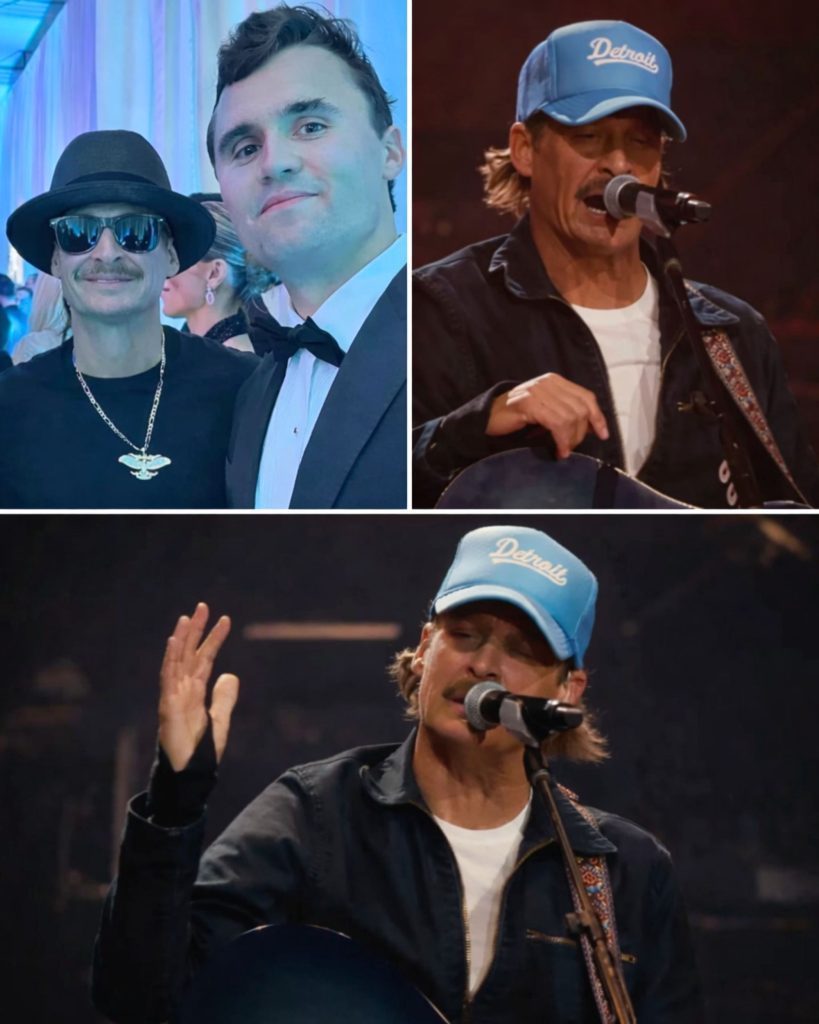
HE OPENED WITH FIRE AND CHAOS — THEN WALKED BACK INTO THE LIGHT AS SOMEONE ELSE. Kid Rock stunned audiences at Turning Point USA’s All-American Halftime Show by flipping the tone of his performance mid-set. He began with explosive energy during “Bawitdaba,” flames rising as patriotic visuals filled the stage. Then he disappeared — only to return under his real name, Robert Ritchie, standing alone in a single spotlight. Delivering a stripped-back, country-style version of “‘Til You Can’t,” he kept Cody Johnson’s lyrics before adding his own verse, shifting the moment from spectacle to reflection. Backed by a full band and a drum marked with the U.S. Constitution’s Preamble, the performance traded bombast for meaning — ending with a message that lingered long after the music stopped.
THE MOMENT HE CHANGED THE ROOM
When Energy Turned Into Tension
The shift didn’t happen all at once. After a run of loud, familiar hits, the crowd expected momentum to keep building — more noise, more movement, more certainty. Instead, Kid Rock slowed the tempo and allowed silence to creep in between notes. Choosing “‘Til You Can’t” felt unexpected enough; reshaping it emotionally felt deliberate. The performance moved away from celebration and toward confrontation, as if the song was no longer entertainment but a question directed outward.
A Song Reframed in Real Time
Where Cody Johnson’s original carried urgency wrapped in warmth, Kid Rock leaned into weight. Certain lines stretched longer than usual, phrases about time and choice landing heavier, almost sermon-like. The tone shifted from storytelling to reflection, making listeners unsure whether they were being invited to sing along or asked to look inward. That ambiguity became the center of the moment.
Audience Caught Between Applause and Listening
The crowd hesitated — a rare reaction in a high-energy setting. Some clapped cautiously; others stayed silent, absorbing the change in atmosphere. The performance blurred the line between tribute and statement, leaving space for interpretation rather than clear intent. In that uncertainty, the song felt alive again, reshaped by context rather than rewritten.
Meaning Left Unfinished
Kid Rock never clarified what he intended, and perhaps that was the point. By refusing to explain, he allowed the performance to exist as something unresolved — part tribute, part personal reflection, part challenge. What remained wasn’t a definitive message, but the feeling that for a few minutes, a familiar song stopped being predictable and became a mirror held up to everyone in the room.
Video