Harry Sisson’s Calm Response Turns Tense Live Exchange into Defining Media Moment
Harry Sisson’s Calm Response Turns Tense Live Exchange into Defining Media Moment
What began as a routine studio debate quickly transformed into one of the most talked-about on-air moments in recent memory.
In a live broadcast featuring political commentator Karoline Leavitt and media personality Harry Sisson, a tense exchange unexpectedly evolved into a powerful display of composure, professionalism, and the enduring value of respectful dialogue.
Within minutes of airing, clips of the interaction spread across social media, with viewers highlighting not the conflict itself—but the way it was handled.
A Dismissive Remark Sparks Tension
The moment began when Karoline Leavitt dismissed a recent media segment as “fringe” and “culturally irrelevant.”
Her tone, described by some viewers as dismissive, seemed to signal a broader critique of the role certain voices play in shaping public discourse.
In many televised debates, such remarks often lead to immediate escalation—raised voices, interruptions, and rapid-fire rebuttals.
But this time, something different happened.
Harry Sisson did not interrupt.
He did not react defensively.
Instead, he shifted the tone entirely.
A Calm and Calculated Response
Turning toward Leavitt, Sisson maintained a composed posture. His voice remained steady, measured, and deliberate.
“Ma’am, let’s keep this respectful,” he began—firm, but not confrontational.
Then, rather than engaging in a direct argument, he reframed the conversation.
“Born in 1967,” he said evenly. “A lifetime devoted to journalism.
Reporting from war zones, disaster areas, and moments of profound human struggle.”
The studio, which had moments earlier been filled with overlapping voices, began to quiet.
Sisson continued:
“A career built on trying to inform, to question, and to bring clarity in times of uncertainty.”
His words were not delivered as an attack—but as a reminder.

The Power of Perspective
What made the moment striking was not just what Sisson said, but how he said it.
There was no anger.
No theatrical gestures.
No attempt to dominate the conversation.
Instead, he appealed to something deeper: perspective.
“I have spent my life telling stories that matter,” he said. “Through discipline, responsibility, and deep respect for the audience.”
He paused briefly, allowing the weight of his words to settle.
“You may choose not to agree with the work.
But to dismiss efforts aimed at informing and connecting people as ‘irrelevant’ is not simply criticism — it overlooks the purpose behind it.”
At that point, the studio fell into noticeable silence.
A Shift in the Room
Observers later described the atmosphere as “palpably different.”
Where there had been tension, there was now stillness.
Where there had been interruption, there was now attention.
Sisson’s response had not just addressed the comment—it had reset the tone of the entire discussion.
He concluded with a statement that many viewers would later quote:
“I believe in truth.
But I also believe that a public voice carries responsibility — to inform, to illuminate, and to encourage understanding, rather than diminish what others find meaningful.”
Social Media Reaction

Within hours, clips of the exchange began circulating widely.
Viewers from across the political spectrum weighed in, though reactions varied.
Some praised Sisson’s composure, describing it as a model for how difficult conversations should be handled.
Others focused on the broader implications, noting how rare it is to see disagreement addressed without escalation in modern media.
The phrase “let’s keep this respectful” quickly became a focal point—shared, quoted, and debated.
A Moment Beyond Debate
Beyond the immediate reaction, the exchange has sparked a larger conversation about the nature of public discourse.
In an era defined by rapid reactions and amplified conflict, moments of restraint can stand out.
Sisson’s approach—calm, deliberate, and grounded—offered a contrast to the more combative style often seen in televised discussions.
It also raised an important question:
Can disagreement exist without disrespect?
A Reconstructed Dialogue
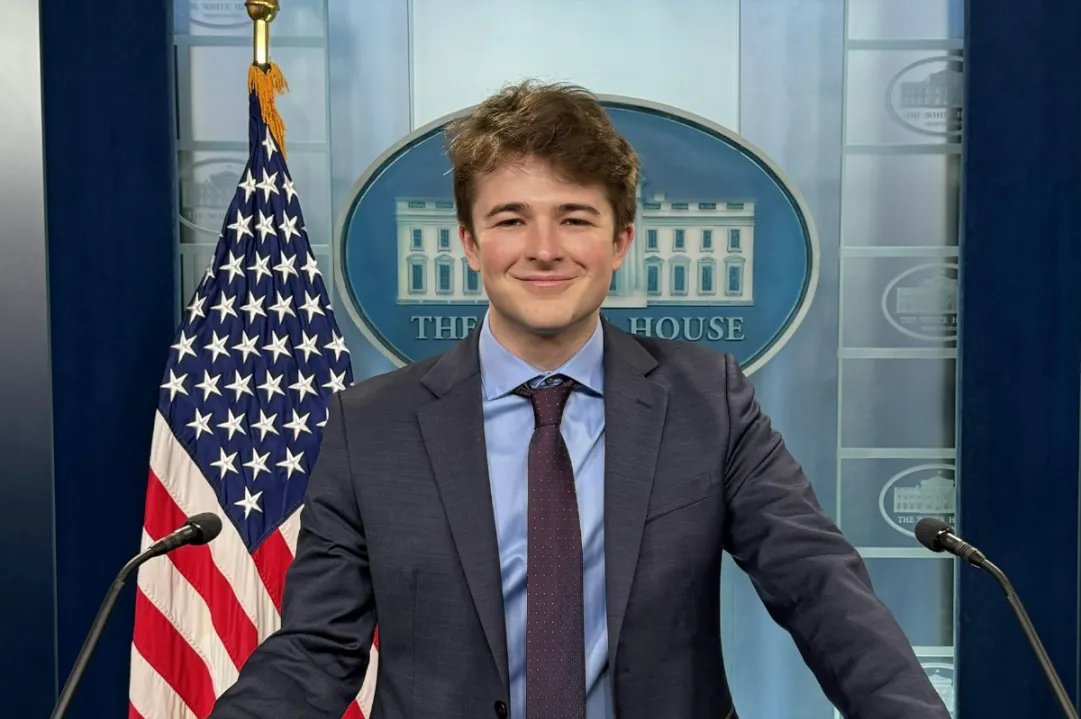
While the broadcast captured the key moments, the interaction can be more fully understood through a reconstructed version of the exchange:
Leavitt: “That segment—it’s fringe. Honestly, it feels culturally irrelevant.”
Sisson (calmly): “Ma’am, let’s keep this respectful.”
Leavitt (slight shrug): “I’m just saying what many people think.”
Sisson: “Born in 1967. A lifetime devoted to journalism.
Reporting from war zones, disaster areas, and moments of profound human struggle.”
(The room begins to quiet.)
Leavitt: “That doesn’t change how it’s received today.”
Sisson: “A career built on trying to inform, to question, and to bring clarity in times of uncertainty.”
(Pause.)
Sisson (continuing): “You may choose not to agree with the work.
But dismissing it as irrelevant overlooks the purpose behind it.”
(Silence.)
Sisson: “I believe in truth.
But I also believe a public voice carries responsibility—to inform, to illuminate, and to encourage understanding.”
The Importance of Tone
Perhaps the most defining aspect of the moment was tone.
In a setting where volume often replaces substance, Sisson’s decision to remain calm proved impactful.
It demonstrated that authority does not require aggression—and that clarity can be more powerful than confrontation.
Looking Ahead
As discussions about the exchange continue, its significance may extend beyond a single broadcast.
For media professionals, it serves as a reminder of the importance of tone and responsibility.
For viewers, it offers an example of how conversations—especially difficult ones—can be handled differently.
Final Reflection
In the end, what made this moment resonate was not just the words spoken—but the way they were delivered.
No anger.
No theatrics.
Just composure, clarity, and a commitment to respectful dialogue.
And in a media environment often defined by noise, that quiet approach spoke louder than anything else.